The System
Most people think business works like this:
Resume/Proposal + Client = $$$
I wish. If only it were that simple. It seems obvious to say, but you don't go from being total strangers with someone to them paying you a million dollars overnight.
In reality, the equation for business success really looks more like this:
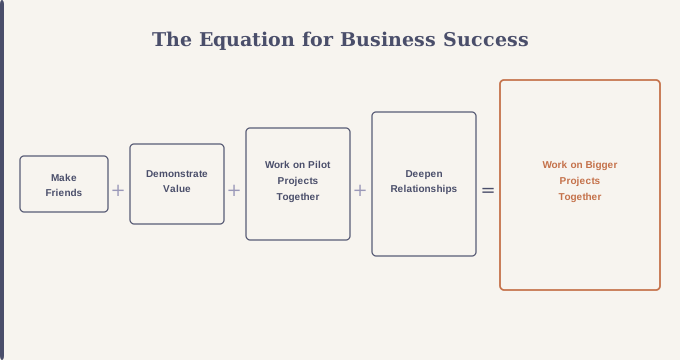
This is the same whether you're looking for a full-time role or doing business development for your agency. You need to know the person hiring, work on a pilot project together, then build your way up.
That's the cycle that leads to sustainable business growth and revenue. And that's the cycle you are actually trying to replicate.
Right now you are trying to skip from making friends to working on bigger projects together. That's why you are stuck. You can't jump ahead, you have to go through all of the steps in between to get there.
The other thing you are doing is neglecting the people you already know and have worked on pilot projects with. You are spending a lot of time and energy on trying to meet new people when you are forgetting about the people right in front of you.
You know that saying, "It takes 20 years of hard work to become an overnight success."? That's this cycle in action.
How it Works
Ok so we've established that people hire their friends and that we can't skip ahead. We have to go through all of these business development steps. So now how do I call my friends and turn that into work? How do I demonstrate value so that we can work on pilot projects together?
The answer here is less about tactics and more about framing. You are probably leading all of your comms right now with self promotion. "I am blah blah blah, Hire me!"
For everyone who hates self promotion you'll be ecstatic to hear what I'm going to say next.
Stop talking about yourself.
You think that to demonstrate value you need to demonstrate your capability, but really what you need to do is offer something of value instead. I want you to go back and read that sentence again because it's a really important distinction.
Work Friends is built on one simple premise.
Being a host is better than pitching yourself.
Building a community is better than networking.
Instead of asking,
- "How do we get more leads?" We ask, "Who should we be in a relationship with?"
- "How do we sell more, faster?" We ask, "How do we create value for partners earlier?"
- "How do we convince them?" We ask, "How do we build something together?"
In short, instead of asking for opportunity we offer one.
The fundamental shift is from pitching yourself to offering value. The sooner you change your mindset from "Hire me" to "How can I help?" the more successful you'll be.
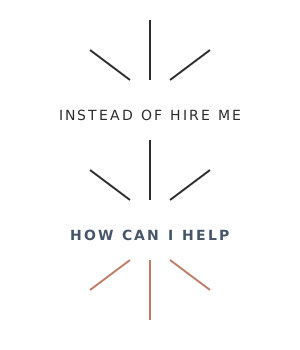
The fundamental mindset shift: from pitching yourself to offering value
Why This Works
Most people spend their entire careers trying to get into rooms. Going to networking events, sending cold emails, even applying to jobs and RFPs. You're obsessed with wherever you aren't. You think luck is the thing that'll help you.
But when you pitch yourself like that, there are two things at your disadvantage.
- You're competing for attention in a crowded market, trying to get validation from someone who doesn't know you from anyone else.
- You're forgetting that sales is just people. And people want to be treated and interacted with in a way that they can hear — not how you think.
Reject the cult of "new" and "more". Instead of trying to knock on closed doors, you're better to build outward from the room you are already in. Said plainly, become better friends with the people you already know, rather than looking for new people to meet.
Everyone comes to you
When you host, you're not just attending — you're the connector at the center.
When you host you create value for your friends and partners. You are working on a small project together which means you are getting to know each other and deepening your relationship.
When you build community you are creating an ecosystem. You set the terms and decide who's in the room. You're building something alongside people who are already values and mission aligned.
When you do this consistently you become the person people want to know. Not because you convinced them or because you are smarter or more successful but because you are empowering and supporting others.
You become a leader in the space, as opposed to another participant.
With this method, you end up attracting opportunity instead of chasing after it. Growth doesn't come from convincing people. It comes from convening them.
What is Relationship Infrastructure?
You have organization and structure around every other part of your life and work. You have systems for managing your finances, your calendar, your projects, your workflows.
But when it comes to who you know and who you want to meet? It's like we go blank. We don't want to do cold outreach cause that feels icky, but we also don't want to reach out to people we know cause that feels vulnerable. We feel more comfortable with an anonymous process (like an application or an RFP) even if we know deep down that it's not effective.
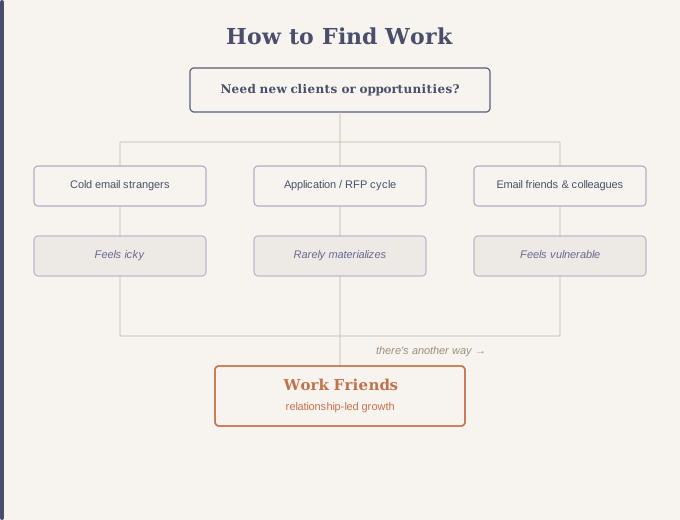
We say we hate self promotion, or that we are bad at sales and business development. Really we're just scared — scared of reaching out, scared of being rejected or ignored. So instead of building intentionally, we do nothing and leave it to chance.
Well I am on a personal mission to make you see how fun and easy sales really is.
Relationship infrastructure is the system you build for intentionally meeting new people and consistently staying in touch with the people you already know. It's treating relationships like the business asset they actually are.
The Secret to Sales
The core of this framework is that you are probably over thinking and over complicating what you think of as sales. You might think of it as having to be someone you're not or as requiring a ton of work that you don't have time for.
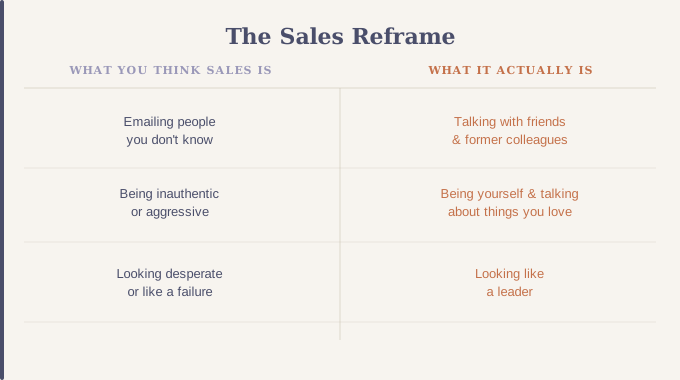
You don't need to do either of those things to be successful. All you need to do is, find an ongoing way that helps you connect with the people you already know and the new people you want to meet. Find a way to offer value to friends and partners. And find a way to work on pilot projects together.
To say this as simply as I possibly can: the more you do stuff you love, the more you meet people who also love the same stuff and then the more you can do the stuff you love together.
It shouldn't really feel like work. It should feel like calling your friends.
Make art! Write a blog! Throw a party! That's it. That's the secret to business.
What You'll Learn
This book shows you how to:
- Reverse engineer inbound opportunity
- Use events as outbound lead generation
- Replace RFP grind with a relationship-driven pipeline
- Turn partnerships into scaled distribution channels
- Get press without PR
- Use content and socials as cold outreach
- Build credibility without self-promotion
- Grow through community instead of pitching
You'll get frameworks, playbooks, and a system to get you organized that you can actually use.
Who This Is For
I call this marketing for people who hate marketing. Or you can think of it as, "Deals Happen on the Golf Course" for Creatives.
This system works well for:
- Executives & Leadership Teams who don't want to spend all their energy on personal brand building or social networking.
- Creative Agencies & Production Companies who are burned out on the RFP grind and want longer term partnerships versus more leads.
- Founders who have built on word of mouth and are looking to evolve or scale to the next phase without burning out or losing their culture.
- Purpose Driven Brands & Non Profits who are navigating changing cultural and funding landscapes.
- Freelancers, Consultants & Solo Entrepreneurs who want work that feels aligned, human, and sustainable.
This system also works well for job hunters looking for full-time, in-house roles.
- We know from experience that most job postings are fake. Every job I ever had came from a friend and started as freelance work that turned into something bigger. (see 'How This Actually Works').
In the end, this is for people who want growth that feels authentic and human.
How This Book Is Structured
How to Use this System
I'd recommend you skim through the entire book first to get you started thinking. Then you can back section by section to places where you feel stuck or need ideas.
Framework & Playbooks
Each section of the framework includes strategy and playbooks that you can implement immediately.
- Positioning
- Relationships
- Events
- Partnerships
- Credibility
- Compounding
Conclusion and Next Steps
If you want to go further, follow me on LinkedIn and Substack where I am sharing essays and tips from over 20 years in business.
If you use this system with generosity, consistency, and long-term thinking, growth stops feeling like something you chase and starts feeling like something you attract.
Impact Statement
Relationship-led growth only works if your relationships aren't limited to people who look like you, think like you, or come from the same rooms you already occupy.
Most professional networks are shaped by proximity, privilege, geography, education, and access — not merit or talent. Left unchecked, "relationship infrastructure" can reproduce the same narrow circles over and over again. Work Friends is designed to do the opposite. It's a system for intentionally expanding who you know, who you listen to, who you collaborate with, and who gets access to opportunity through you.
In a moment when formal DEI programs are being rolled back and institutions are retreating from equity commitments, individual behavior matters more than ever. Building broader, more diverse, more inclusive relationships isn't political — it's practical. It makes your work better, your thinking sharper, your teams stronger, and your businesses more resilient.
This framework isn't about optimizing who you already know. It's about getting out of your bubble. It's about designing rooms where new voices enter, new perspectives shape decisions, and opportunity circulates more fairly. The work is simple, human, and powerful: make new friends. Invite different people into the room. Build growth by expanding who belongs.