Part 06 — The Compounding Loop
Where everything comes together
The Compounding Loop is where everything comes together. Each time you host, connect, build trust, and create value, your network deepens, your reputation strengthens, and your opportunities expand — not linearly, but exponentially. What starts as a few intentional relationships turns into warm introductions, repeat collaborators, unexpected partnerships, and long-term growth that feels natural instead of forced. This isn't about one campaign or one launch. It's about building a system you carry with you for the rest of your career. One that gets more powerful every time you run the loop.
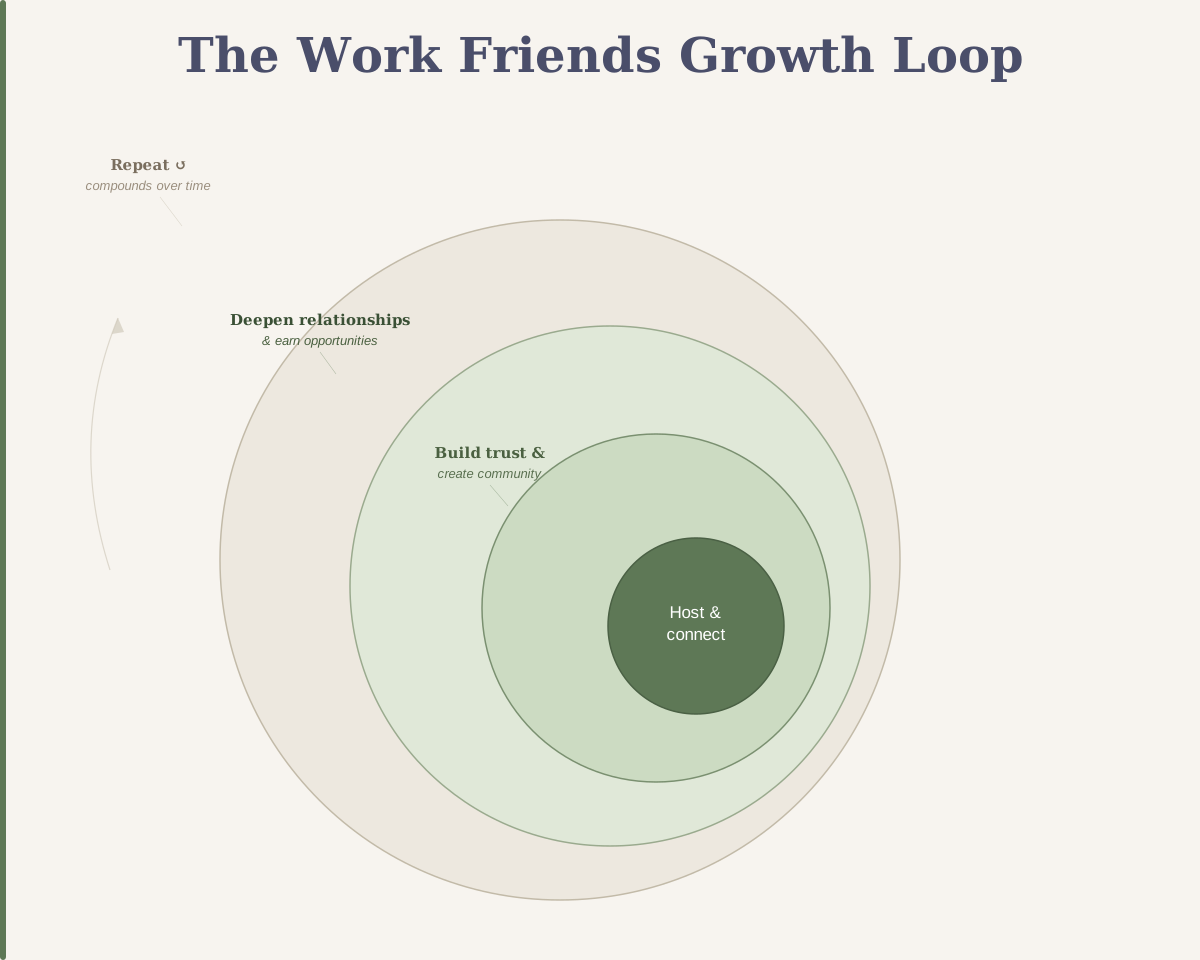
Compounding Timeline
Month 1-3: You might feel like nothing is happening. Or you might get a life changing call the next day. Either way, you're hosting events, reaching out, showing up. You're planting seeds.
Month 4-6: You'll get a surprise inbound. Someone will think of you for something — a project, an introduction, an invitation. It might not be the big break, but it's proof the system works.
Month 7-12: People will start introducing YOU to others without you asking. Your name comes up in conversations you're not part of. "You should talk to Jessica, she knows this space."
Year 2-3: You're turning down work because you have too many warm opportunities coming in through referrals. Your pipeline is mostly inbound. Cold outreach becomes rare.
Year 5+: Your network is an actual asset. People you worked with a decade ago are now in positions to hire you, fund you, partner with you, or open doors you didn't know existed.
Year 10+: You realize you're still working with people from your first jobs. They've changed companies five times. So have you. But the relationships kept compounding.
Year 15: You write a book about it.
The compounding doesn't happen in weeks. It happens over years. But once it starts, it's exponential.
Client Retention
I want to emphasize this one last time. People are always focused on meeting new people. But don't forget about the people you already know! Retaining or re-engaging current clients and friends is probably the fastest and easiest way to bring in new revenue.
This system helps you deepen the relationships you already have. When you host events and invite current clients, feature them in content, introduce them to valuable contacts, and check in regularly beyond project updates, you shift from being a vendor to being a partner. Your clients start to see you as someone who creates value in multiple ways, not just through deliverables. That's when renewals become automatic and referrals become abundant.
All Together Now
Here is an example of how you could turn this playbook into a calendar & operating plan:
| Objective | Format | Frequency |
|---|---|---|
| Category leadership | Industry panels | Monthly |
| Client retention | Fireside chats | Quarterly |
| Deepen relationships | Curated dinners | At Tentpole Events |
| Community growth | Partnership | Ongoing |
| Media profile | Direct to Journalist Pitch | Ongoing |
| Top-of-funnel growth | Interview Peers | Weekly |
Maintenance Mode
You don't have to do every single one of these. But if you have a bigger sized company with resources allocated for growth you could put together a system that moves the needle.
In year one, this system requires time to get set up and organized around hosting events, mapping your contacts, creating content, and staying in touch with your network.
But once you have it going, you can shift into maintenance mode. By year two or three, you can run this system on muscle memory because:
- Your events are established and people expect them
- Your network knows to come to you
- Inbound starts replacing outbound
- The system runs itself
The hard part is getting started but the reward is the rest of your career.