Part 02 — Relationships Pipeline
Everyone you know, you'll know for the rest of your life
Let's begin with the key pillars of business development.
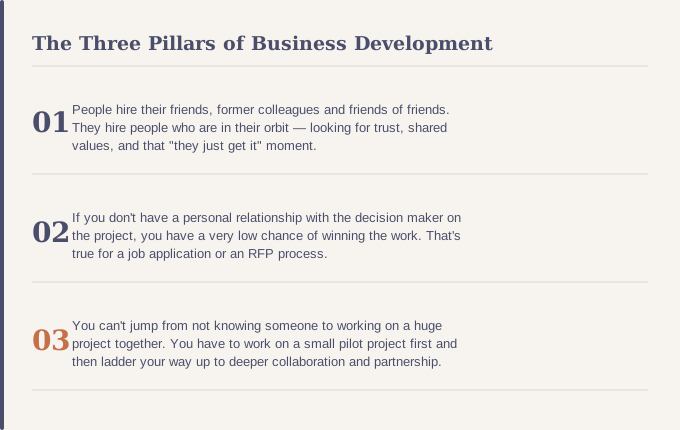
In this section, we are going to explore how to build a pipeline based on these core truths.
Part 02.01 — It's Who You Know
You know it's true
The first step is we need to assess and map out who we know.
You need to build a wide, warm, and active network. You know a lot more people than you realize and you can't predict where opportunity will come from. Because of how connected the world is now, everyone you know stays in your orbit. People change jobs, careers, and continents — I still get referred work from people I worked with 15 years ago. And I get work through people I would have never thought to reach out to.
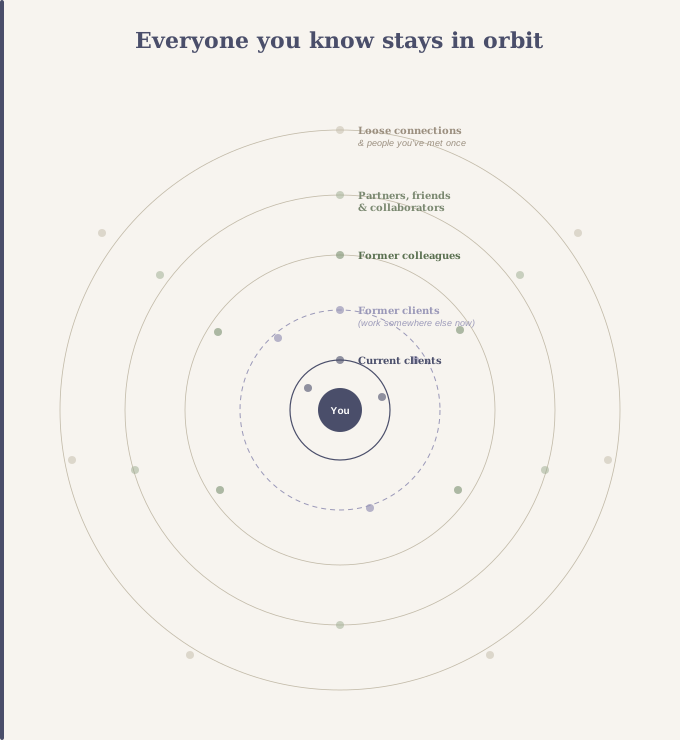
You are inevitably going to focus on people and companies that feel "high value" and prestigious like people you know who work at Google or Anthropic. But know that those opportunities are very competitive and will take a long time to develop and materialize. Don't forget that the market is huge and opportunities are everywhere. You should prioritize people who you know better and have stronger relationships with at any size company that will be easier to get into and quicker to say yes.
PLAYBOOK
Here are 5 Steps on how to build your Relationship Pipeline today.
Step 1: Start by creating a database of everyone you know. And I mean everyone. Track city, email, phone, title, and company — people change jobs, careers, and countries constantly, and you never know where opportunity will come from. In business they call this a CRM, call it your Friend-RM.
Step 2: Are you actually staying in touch with these people? Not everyone all the time but maintaining relationships through some consistency. Hate to state the obvious but if you aren't talking to people and telling them what you're working on or what you need regularly, they can't bring you new opportunities.
Step 3: Normalize asking for help & referrals. There's an old saying in sales that goes, "When you want to ask for money, ask for advice instead." Ask your network when you are looking for new clients, projects and gigs. Ask every client you have ever worked with to introduce you to someone you should meet. Track introductions as part of your pipeline so relationships don't disappear into your inbox.
*You can even offer commission for introductions that lead to signed contracts if you want to offer an added incentive.
Step 4: Take a Friendship-first approach. Change your language from "Hire us" to "I want to invite you to join X" or "I'd like to connect you to Y".
Step 5: You need volume. Dozens of active relationships, not three to five. And you need to build continuously, not only when your pipeline is dry. ABB – Always Be Building.
A few quick tactics you can try right now:
- Spend a half hour a day engaging thoughtfully on LinkedIn, Substack, or whatever your preferred platform.
- Once a week, personally reach out to someone who you haven't spoken to in a while.
- Once a month, send out an email or post a blog on what you're up to.
Part 02.02 — Your New Relationship-Led Sales Cycle
How deals actually happen
Right now you have a spreadsheet that tracks the status of your RFP proposals with estimated budget and deadlines. Instead of that, you should be tracking and developing a strategy for how to engage people at each level of this funnel.
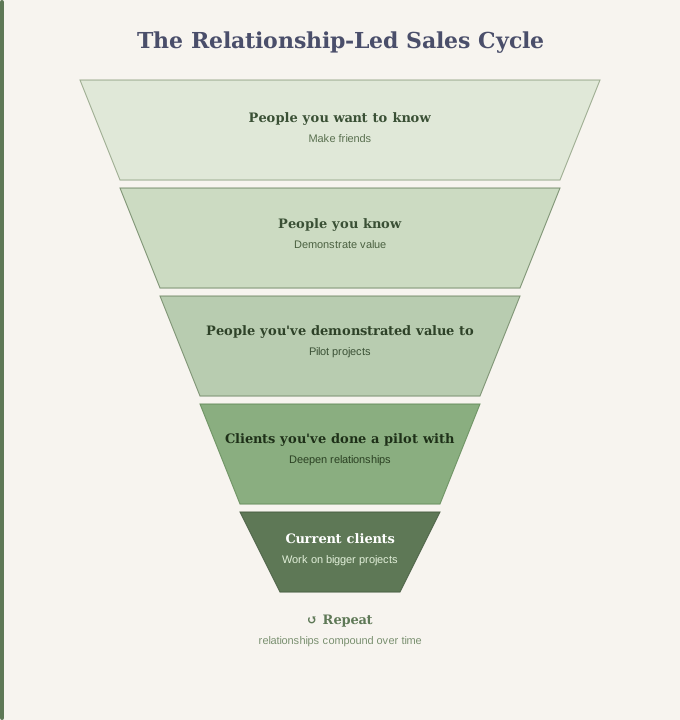
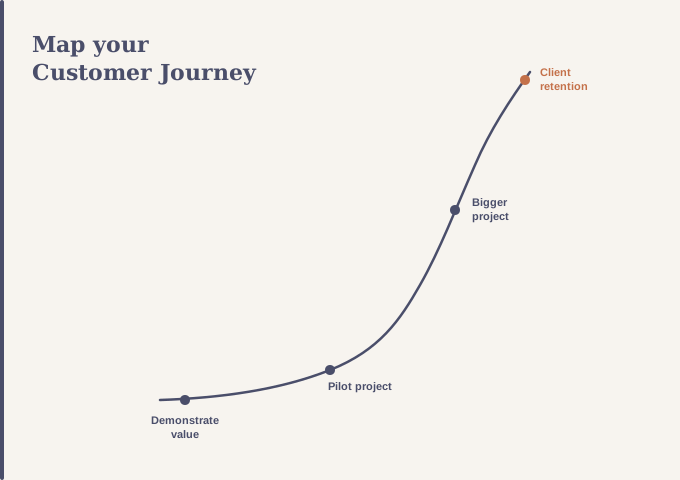
You are losing people after you meet them because you don't have a good answer for how to demonstrate value and how to work on a pilot project together. You can meet people all you want, but I'm sure you've noticed that without an immediate and obvious next step, the meeting falls into oblivion. You have a call, walk them through your capabilities deck and then it falls off a cliff. Remember how I said that demonstrating value is not demonstrating your capabilities. It's offering something of value. You need something to do next.
Map out your Customer Journey so you have a go to next step when you meet a new prospective client. Maybe it's a workshop or a sprint, a diagnostic or review, whatever makes sense for your business is fine but make sure it is short and inexpensive. Again easy to say yes and quick to start is your best bet.
The other mistake you are making is that you are focusing all of your time and energy on trying to convince people you want to know instead of focusing energy on the people you already do know, already have demonstrated value to and already worked on pilot projects with. It's faster and easier to convert those folks. Don't sleep on who you know in the name of new and more.
TIP: CLIENT RETENTION
Most businesses obsess over new client acquisition and neglect the clients they already have. But your existing clients are your easiest path to more revenue — renewals, expansions, referrals.
Here's how to use the Work Friends system for retention:
1. Quarterly Check-Ins (Not Just Status Calls) Don't just talk about the project. Ask: "What else is happening in your world? What are you thinking about for next quarter?" Treat them like a relationship, not a contract. I also call this strategy just, go to lunch!
2. Invite Them Into Your Events Host a dinner? Invite your best clients. Running a panel? Ask them to speak. This positions you as a connector, not just a vendor.
3. Make Introductions Connect your clients to each other or to people in your network who can help them. When you create value outside the scope of work, you become irreplaceable.
4. Feature Them Publicly Fireside chats, case studies, social posts. Make them look good. When you elevate your clients, they want to keep working with you.
5. Track Relationship Health, Not Just Project Status Add a column in your CRM: "Last personal conversation." If it's been 3+ months, time to reach out.
I used to know salespeople who took their clients to a workout class and cold-pressed juice once a week. That sounds like literally my worst nightmare, but the point is, do something that feels natural and aligned to your relationship.
The work you do keeps clients happy. The relationship you build keeps them coming back.
Part 02.03 — Map Out Who You Want to Meet
Be strategic with your outreach
One of the most important growth moves is intentionally mapping who you want to meet. Not just companies you admire, but specific roles, thinkers, and operators you'd love to learn from or work alongside.
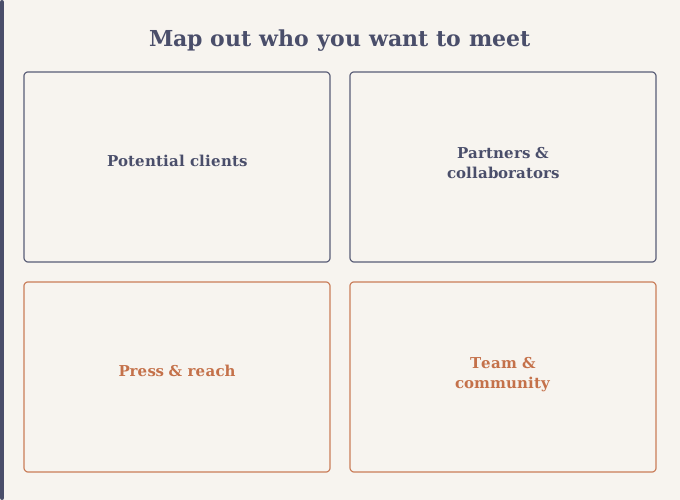
When I was in the band we would look at our friend's tour schedules and then email all the venues, coffee shops, local newspapers, DIY promoters, college radio promoters -- anyone who we thought might like us.
Early in my professional career, I used to apply for jobs I didn't actually want just to meet people at competitive companies and hear what they were up to. When I worked in both production and sales & business development, I used my role as a calling card to reach out to dream organizations I wanted to connect with.
You don't wait for access; you design it. When you get clear about who's in your future ecosystem, you can reverse-engineer proximity to them.
I want to remind you again that you are not going to be able to resist thinking of the biggest, most prestigious names out there when you do this. I challenge you to look right under your nose for an opportunity that could be passing you by. Something you would have never thought of, that will be quick to close and fast to start.
TIP: START SMALL
This probably feels overwhelming. Don't make a list of 1,000 people. Start with a short list of 5-10 people and organizations who really make sense for what you're doing. Quality over quantity. Spend time on really understanding who you could add value to first, then expand from there.
Part 02.04 — How to Do Outreach
It's just an email
When we wanted to meet another band, we didn't cold email them, we invited them to play a show with us. That's both demonstrating value and working on a pilot project together from the business success equation. We'll get to that strategy more in the next section.
But for now I want to talk about what to say when you are reaching out with a more general ask. I am adding a couple of email templates I've used to great success below. Notice that they are friendly and human not formal or irrelevant. They don't push they suggest.
I generally think it's good to coordinate email outreach with a launch. Even if it's not really, just make something up. Launches are new, fun and exciting. People respond to that energy. These work best as a mass BCC email. That way you create inbound and you aren't writing to people who aren't interested in what you're talking about at the moment.
Always send these on a Tuesday at 10 am. Launch day. The mass BCC email I am sharing below got 77 responses out of ~300 sends. That's a 25% response rate!
A One on One email is better if you are reaching out to someone with a specific ask or opportunity. This example got a response and led to a meeting. Understand the difference between the two types and learn how to use which email outreach when.
PLAYBOOK
One-on-One Outreach
Mass BCC Message
How to Ask for Referrals
One of the quickest and easiest ways to find new projects is to either retain your current clients or ask them for referrals. People who have already worked with you and trust you are your strongest growth channel. Don't overcomplicate it — a simple, direct ask goes a long way: "If anyone comes to mind who could benefit from this kind of work, I'd love an introduction."
And if asking feels uncomfortable, flip it. Offer referrals first. Introduce them to someone helpful. Share an opportunity. Make generosity your default. When you position yourself as someone who connects and adds value, referrals stop feeling transactional and start becoming a natural extension of the relationship.
REFERRAL MESSAGE
What if They Don't Respond?!
With the band we used to send out 100's of emails. Most people never responded or even wrote back to say no, but all we needed was 1 yes to achieve what we were hoping for. Never forget you only need 1 yes.
Doing outreach can be scary — whether it's cold emailing, asking someone you know for help, or trying to sell something — but it really doesn't have to be. People want to hear from people. They're actively looking for collaborators, solutions, and opportunities all the time.
Seriously stop overthinking this and start doing it in a way that feels comfortable and human for you.
I once worked with a colleague who was terrified of outreach. The way she got over it was to reframe it as offering something genuinely useful instead of asking for something. Not only did people respond, it changed her entire relationship to business development and eventually gave her the confidence to start her own company.
Also: no response doesn't always mean no. It usually means busy, wrong timing, or lost inbox. Most people in sales have stories of sending multiple emails before the moment finally clicked. Outreach isn't rejection — it's timing, persistence, and being human. Think of it like sending updates and something of value rather than bothering someone to buy something.
I also want to mention that sometimes we think we know a brand from the outside and we identify it as someone who could be a good fit as a partner, but we don't really know what their strategy and priorities are on the inside. A lot of times if you don't get a response it's just misaligned. Learn more, tweak your value offer and try again.
Follow Up After No Response
Following up isn't annoying, it's how real relationships actually work. Most people don't respond because they're busy, not because they're uninterested. The key is to have something useful to send: a new project launch, an article, a thought, an update, or a relevant connection. Think of it as checking in, not chasing. Timing matters more than intent, and something that isn't relevant today might be perfect three months from now. Keep going, stay human, and let consistency do the work.
Get Over Feeling Scared
Outreach feels scary because we make it mean way more than it actually does. You're not doing anything wrong — this isn't a scam, a pyramid scheme, or some shady LinkedIn hustle (is it?). You're reaching out about a legitimate opportunity, conversation, or idea. Start with people you feel safest with first: friends, former colleagues, warm connections. The first positive response is everything — once you get one "yes," it's like, we got one, baby! — and suddenly the fear subsides. Confidence comes from motion and you build it by doing.
Permission to Fail
Truly. I've worked with so many brilliant people who hold themselves back because they're afraid of getting it wrong or waiting for everything to be perfect. I'm here to tell you that failure is inevitable and that you learn by doing, not by thinking.
Every successful person you admire has had a host of bad ideas, awkward moments, and things that didn't work. I can think of a million times I failed, and every single one taught me something useful that made the next thing better. Most people won't notice, and even fewer will remember. What matters is that you take action and keep going.
Part 02.05 — Find Your Work Friends
Who turns the light on when you're walking around in the dark
No one builds anything meaningful alone. Solo entrepreneurship is a myth, and isolation is a growth limiter. What you actually need is more like a personal board of advisors. Call it your "work wife" or your mentors, call it whatever you want. But call 3–5 people who you'll have around you that you can intentionally grow alongside. These are the people who tell you the truth, make the introductions, pressure-test your ideas, encourage you when you're tired, and help you execute when things get real.
My Work Friends
I have 4 or 5 friends who are brilliant and talented across different industries and perspectives. Some are senior executives at major companies, some are independent consultants, some are entrepreneurs building their own thing. When I need to gut-check an idea, when I'm stuck on something, or honestly when I just need to vent, these are the people I call.
We catch up every 3-6 months or so — not on any formal schedule, just when it makes sense. Sometimes it's a long call, sometimes it's a quick text thread. But every time we talk, I learn something. I hear what's happening on the ground in their industries. I get new information that informs my thinking. They tell me when I'm being lazy or making excuses. They encourage me to keep going when I'm doubting myself.
These aren't transactional relationships. I'm not calling them only when I need something. We're genuinely invested in each other's success. And because we work in different spaces, we each bring something different to the table — different networks, different expertise, different perspectives.
That's what a personal board of advisors actually is. Not some formal advisory structure with quarterly meetings. Just a handful of people you trust completely who make you better at what you do.
If you are doing this for the first time, look at who's around you and who has complementary skill sets. Do you have an existing trust based on a previous work experience? The goal is to build alongside people who make you better, braver, and more effective than you'd ever be alone.
TIP: FRIENDS HELPING FRIENDS
Put together a small group of friends as a work accountability group. Schedule time weekly to work on whatever is the most pressing thing you've been putting off. Maybe it's writing on LinkedIn or Substack or maybe it's working on BD and outreach.
Set up a text or WhatsApp thread to share tips on what's working for you and set a calendar invite to do it at the same time every week. Chit chat for 5 minutes at the start and then use the time to actually do the work. You can go camera off and mute.
This not only helps you get it done but is more fun too.
TIP: THE FRIEND-BR
In business you'd call this a QBR or a quarterly business review.
While that's much more formal, staying in touch doesn't have to be complicated. Here's the system I use:
Every quarter, I go through my Friend-RM and reach out to a few people I haven't talked to in a while.
The message is simple:
"Hey [name], been thinking about you. How's [thing you know they were working on]? Would love to catch up if you're free for a call/coffee."
That's it. No agenda or ask. Just a genuine check-in.
Sometimes they're too busy and that's fine. But sometimes this leads to jobs, collaborations, referrals, and most importantly friendships that last years.
The key is consistency. Pick a cadence (quarterly, bi-annually) and stick to it. Add it to your calendar. Make it a ritual.