Part 05 — Credibility (Part 2)
Part 05.05 – Content & Social
Build authority without self-promotion
Instead of creating AI generated thought leadership and posting a lot of bleep blop about yourself online, I'd encourage you rather to be a facilitator of conversation and connection.
Remember from the core principles, this isn't about you. You want to make everything about other people.
When you interview someone, you are hosting. You are demonstrating value and working on a pilot project together. You are creating a community and ecosystem around your ideas.
This is how you go from emailing someone you don't know, to becoming partners and clients. It's how you go from "me" and "you", to creating a newly established "we".
You can tag people, co-publish work, and share other people's content all for free. This is probably the easiest, cheapest and lowest lift activity you can do to create infrastructure around relationships.
You can also turn all of your events into content. Think of it as IRL BD vs. Online BD.
Please note: These are designed for network effects, not instant virality
#1 — Weekly Social Lives / Interview Series
This is a good tactic to use when you want to build top of funnel growth, network expansion, create a consistent presence or inbound, have a low budget, and/or have a focus on global reach and online makes more sense than in-person events.
I had originally had this one under events since you invite people to attend but then I moved it here since its a great example of growing a following.
Your objective here is to build visibility by giving others visibility. Instead of posting online about yourself, what I want you to do is invite other people on to your socials to talk about their work. Every guest brings their network and you become the connector at the center.
PLAYBOOK
Here's what you do: Launch a weekly LinkedIn or IG Live (whatever platform is best suited for your business). Use a simple interview format, with one host and one interviewee. These should last between 20 - 40 minutes long. Invite someone relevant in your industry to share what they're building and learning. Make sure you connect with them in advance on what it'll be like and what they want to talk about. They might have relevant launches or new projects they want to feature or conversely specific things they do not want to discuss.
Here's what happens: This gives them visibility and a platform to share their work (i.e. press). You grow through your guests' networks, position yourself as a connector, and build brand awareness and trust. You also get to share timely updates since you have a live weekly cadence.
Here's what to do after: Send personal thank yous and share clips across both of your channels. You promote it, your guest promotes it, and have partners amplify it. You can also create an archive on YouTube or your website. And you can use these as content blocks in your email outreach or newsletters.
Here's how to measure success: Follower growth, guest network expansion, inbound conversations, relationship depth.
[see case study below]
#2 — Interview Peers
This is a good tactic to use when you want to grow your network and expand reach.
This is the low-fi version of the last one. Instead of a live weekly audience you do pre-fab, written Q&As or you could even transcribe and then edit a phone conversation. Here your objective is to build visibility by giving visibility — positioning yourself as a convener while borrowing reach from your peers' networks.
This one feels low-stakes because it is. You don't need a studio, a camera crew, or even a following. You need a genuine curiosity about what other people are building and a willingness to ask them about it on the record.
I'd write it up as a Q&A — lightly edited, just enough to read cleanly — and publish it wherever you have a small foothold. The guests will share it. Their audience would see it. A handful of those readers will follow you. Then do it again the next week. It's not glamorous, but it works.
The interview series becomes your calling card and becomes a legitimate reason to reach out to people you want in your orbit. Instead of sending a cold "let's connect!" message, you're offering someone something — a platform, visibility, a chance to share their work. That changes the entire energy of the outreach.
Quick work story – I actually met my current Co-founder of Friend of a Friend because I was featured on a friends Substack that utilizes this format. She reached out as we have similar backgrounds and wanted to connect. Two months later, we launched a community together!
PLAYBOOK
Here's what you do: Come up with a simple theme or hook that your interview series will be about and that is relevant and timely for your industry. Come up with a standard set of questions you can ask everyone. Make some easy documents like a shared doc or form for people to duplicate and fill out. Keep these short and let the person take the conversation wherever they want. Remember, its not about you!
Here's what happens: When you publish an interview of someone else, they will inevitably share it with their networks as being featured. Each guests brings their audience to you, expanding your reach. Meanwhile, you've also deepened your relationship with the interviewee, as you have worked on a small project together and created something of value. They will absolutely remember.
Here's what to do after: Similar to the last one you will promote it, your guest promotes it, and you can have your partners amplify it. And don't forget you can use these as content blocks in your email outreach or newsletters!
Here's how to measure success: Follower growth, Inbound DMs and intros, Repeat guest referrals
#3 — Partner/Client Features
This is a good tactic to use when you want to strengthen partnerships, improve retention, and increase long-term collaboration.
Here your objective is to reinforce trust and value by publicly spotlighting your partners or clients — making the relationship visible, mutually beneficial, and reputation-enhancing. The thing I want to emphasize here is that this is a retention strategy disguised as a content strategy.
When you publicly spotlight a partner — a client, a collaborator, a community member — you're doing several things at once. You're giving them something of value outside of whatever you're being paid for. You're demonstrating to their peers that this person is worth knowing. And you're signaling to everyone watching that you're the kind of operator who makes the people around them look good.
That last part compounds in ways you can't fully plan for. People talk. They remember who made them feel seen. The tactics here can be simple: a LinkedIn post, a newsletter mention, a short feature, a tag. The investment can be low. The relationship equity it builds is not.
PLAYBOOK
Here's what you do: This is essentially the content version of the Fireside Chat from earlier. You want to create an in-depth feature of your partners that could work as posts, newsletters, and look beautiful on your site. Focus on storytelling and the why behind their work. Even consider hiring a freelance journalist to write it so it feels more like a magazine story. Include their mission, impact, and insights — not just your collaboration. Make it visual with photos, videos or design elements that bring the content to life.
Here's what happens: Partners amplify the content to their networks, trust deepens, and your relationship shifts from transactional to strategic.
Here's what to do after: Send thank-yous and performance metrics, tag them, quote them, and make them look good. Propose next collaboration or activation, Introduce partners to others in your network
Here's how to measure success: Partner amplification and reach, Strength of ongoing collaboration, Renewals or expanded scopes, Warm inbound via partner networks
#4 — Curate Voices
This is a good tactic to use when you want to build influence through community trust, and relevance.
Here your objective is to position yourself as a signal source by curating the smartest ideas, people, and work in your space — not producing original content of your own. I want to be clear that curating content is not the "easy" option because you're not creating anything original. Done well, curation can actually be a lot harder than original content — and even more valuable.
Anyone can share a link. What makes you a trusted curator is the layer of judgment and perspective you bring to it. Why does this piece matter right now? What's the implication for people in your industry? What does it connect to that most people haven't connected yet? That's the work — and it's the kind of thinking that builds a reputation over time.
People who do this well become known as the person to follow in their space. Their feeds and newsletters feel like a service because every time something important is happening, they've already found the best version of the conversation and pointed you toward it. That's a position of authority.
PLAYBOOK
Here's what you do: Pick an angle of what you are going to be curating and a platform to focus on. Then regularly share articles, posts, insights, or work from others with short commentary on why it matters. You can also do a massive round up of like 10 things that happened this week. Make sure you tag creators, invite comments and discussion and connect dots between ideas and people across industries. Make it a thing where people are dying to be featured by you as an industry tastemaker.
Here's what happens: You become a trusted filter creating influence across taste and culture. This will strengthen your relationships with creators, and build consistent visibility as a leader in the space.
Here's what to do after: Thank and engage with creators, Invite top voices into interviews or events, Track emerging patterns and themes
Here's how to measure success: Engagement quality (comments, saves), Creator relationships formed, Repeat audience interaction, Perception as trusted curator
How to Interview People
Great interviews are about creating the conditions for something real to emerge. Once, I had the privilege to interview Monica Lewinsky in a one-on-one fireside chat about her anti-bullying nonprofit. My goal was to be deeply respectful while still creating space for substance, not soundbites. That starts with preparation: know what the person actually wants to talk about, come in with thoughtful questions, and make sure they feel comfortable and clear on what to expect.
Frame questions in open ways — "Can you talk about X?" — so they have room to go where they want, instead of boxing them into yes/no answers. When people feel safe, seen, and prepared, they give you their best thinking. Talk less, listen more.
TIP: Podcasts
I know everyone loves podcasts and thinks they sound so fun and look so easy cause you're just talking right? I can't stress enough how much work they are. I really press you to consider if this level of time, commitment and investment is the right format for your brand or business before you start one.
TIP: Magazine
If you want to double down on content and creativity or design are core principles for your business, consider a magazine or a zine! A print artifact can be super impactful as outreach, a takeaway gift at an event or a client retention tool.
[ CASE STUDY ]
How a Weekly Live Interview Series Grew Anthem From 0 to 5K Followers
When we launched Anthem Awards, we had no social media following. We actually started from zero. We were a brand new awards program trying to build credibility and community from scratch.
The foundational layer of content had to be to post about ourselves. We shared our mission and built a content calendar full of branded graphics and award announcements like entry deadlines and general info.
But in order to grow fast, we knew we needed some other strategy than just consistently posting the basics.
I kept coming back to the same question: what do people actually want to watch? What would make someone stop scrolling and tune in every week?
The answer was our community.
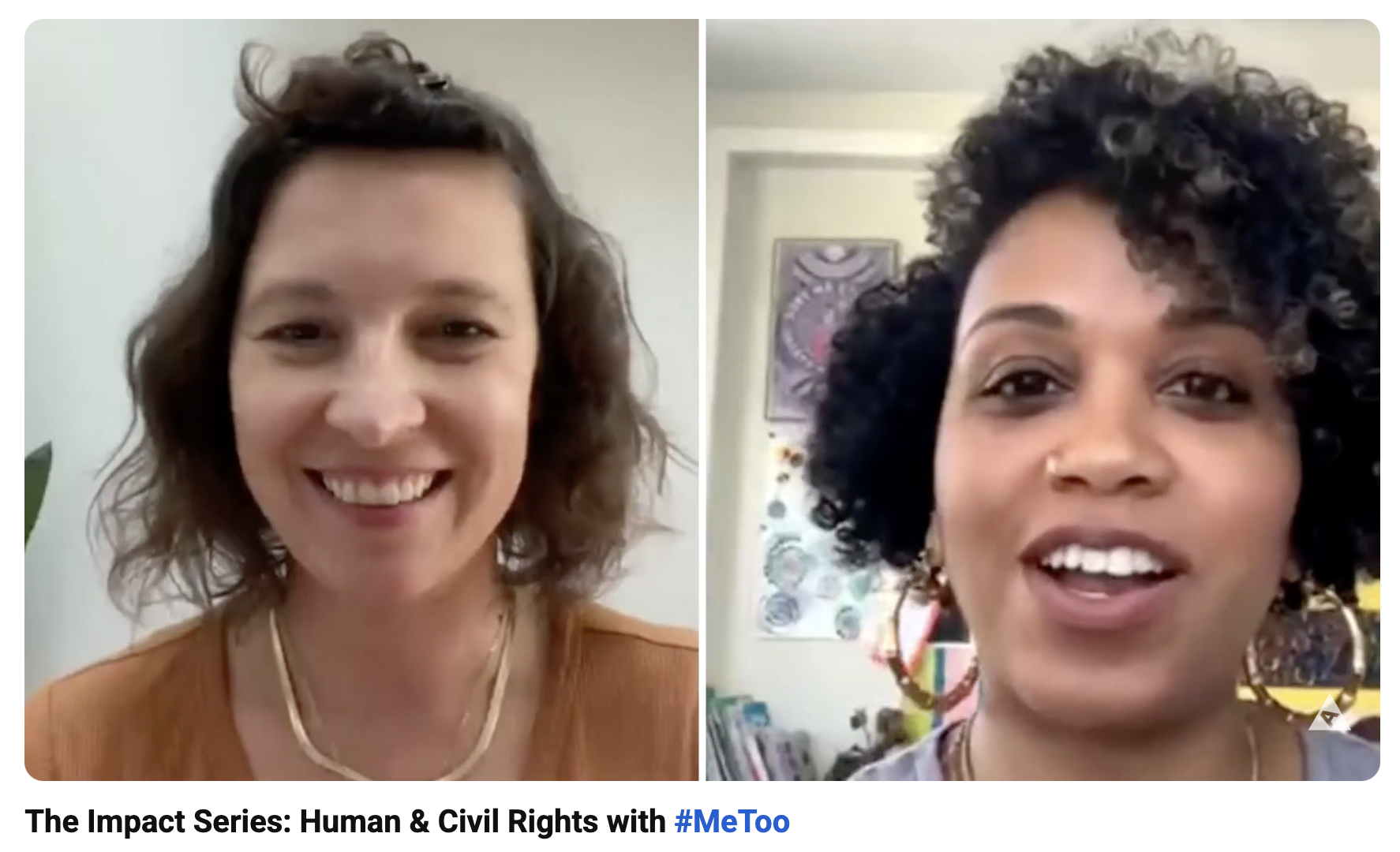
The Impact Series, Anthem Awards, 2021
This award was all about giving a platform to the people doing the work we were celebrating. And so we had to demonstrate that on our channels as well. Even before we had the real stories of winners to use to promote it.
We tried all kinds of series ideas. We posted about artists, musicians, filmmakers and iconic brands that all had made a contribution in the impact space.
Then finally we launched The Impact Series — a weekly live interview show where I sat down with Anthem partners and winners and let them talk about their work.
The format was simple. Twenty to forty minutes. One guest. One conversation about what they were building, what they were learning, and why it mattered. We promoted it to our network, our guests promoted it to theirs, and partners amplified it across their channels.
Every week, a new guest. Every guest, a new network.
Over 6 months we hosted movement leaders, major brand CMOs, and nonprofit leaders doing some of the most important work in their fields. Our Instagram grew from zero to 5,000 followers in 18 months totally organically.
Here's why it worked: We made it about them, not us. Every episode was a platform for our guest — their work, their story, their ideas. We were promoting the people Anthem celebrated. And that's a fundamentally different energy than self promotion.
We were also consistent and hosted every single week for 6 months. The first three months felt slow or inconsistent but then momentum started to build.
The lesson isn't about social media tactics. It's about the underlying principle: build visibility by giving visibility. When you consistently create platforms for other people, you become the connector at the center — and that position compounds over time in ways that self-promotion never could.
Part 05.06 – Email & Newsletters
Think of it like Electronic Mail
Don't forget that you already have a platform to talk about whatever you want and give your partners and clients space to do the same. It's your email!
I had a friend in my band days, who used to send out these super long, story like emails to promote his shows. He'd talk about whatever he was thinking about and mention whoever he hung out with that week. Everyone loved getting his emails. They were all waiting to see if their name would be mentioned. It was super effective as a format.
Email and newsletters have one of the best ROIs in business and probably the worst reputations. Most people associate them with spam but used right, email is one of the most human, intimate channels you have. I have used them to insane success personally in my career. When I compare the time I spent vs. the money I made, it's unmatched by any other platform or tactic.
The rule is simple: email people you actually know, don't send too often, and write like a real person, not a bot.
Think updates and things people actually want to read, and less about CTAs and promotion. Conversations and interviews work especially well as they bring in new perspectives, give your community something genuinely interesting, and naturally expand your reach through your guests' networks. Substack makes this relatively easy now but you can also just send out an email from your provider.
In Practice
I typically send emails when I have major life updates or when I'm looking for new projects. When I first launched my consulting practice, I sent them quarterly. Now I send them when there's something worth sharing.
I use the same spreadsheet where I track past colleagues (the Friend-RM I mentioned in the Relationships section at the top). I BCC everyone at once. No fancy segmentation. No email marketing platform. Just Gmail and a personal note.
Here's what typically happens:
- About half the responses are people just wanting to say hi and catch up
- 2-3 people mention potential projects or opportunities
- 1 usually turns into actual paid work
Remember you don't need a million likes, you just need to find the right people.
What makes these emails work:
- They're personal, not promotional. I lead with life updates before mentioning work.
- They're short. 3-4 paragraphs max. People are busy.
- They're human. I write like I'm talking to a friend, because I am.
- I'm not asking for a job. I'm sharing what I'm up to and inviting connection.
- The ask is soft. "If you know anyone who needs help, keep me in mind" vs "Hire me!"
Steal My Email
This is an actual email that I sent out on September 10, 2024. The same day I got a call from a friend in Paris who was looking for someone in Madrid for a new project she was working on. I started the next week and wrapped a year later.
A few more tips:
Don't apologize for emailing. If you're worried it's annoying, you're probably sending too often or being too salesy. Fix that instead of apologizing.
Subject lines matter. "Quick update" is boring. "I moved to Madrid + launching something new" is interesting.
Make it easy to respond. End with a question or an invitation, not just information.
Track who responds. Add them to your active relationship list. They just raised their hand.
If your newsletter feels like something you'd actually want to receive, you're doing it right. It should feel like hearing from a friend.
Part 05.07 – Online Community
Building a community is better than networking
Online communities are everywhere — but they're all built for different purposes, people, and moments. If you're going to start one, the most important thing is that you're genuinely committed to facilitating it, not just launching it. Communities don't run themselves — they need thoughtful moderation, care, and consistent presence to feel safe, useful, and alive.
In Practice
My co-founder Alison and I launched Friend of a Friend because we kept having the same conversation: most existing communities for professional women were either very US-based or hyper-local to individual cities. But the nature of the EU is different — people are often from one country, living in another, and working across borders. Opportunities are concentrated in Northern Europe while many people live in Southern Europe. We saw a need for cross-border collaboration and decided to build something for it.
Before we launched, I talked to a few friends about what they'd actually want out of something like this. They all said the same thing: they didn't want a lot of distracting chit-chat. They wanted something that was legitimately for collaborations and opportunities. Real work, not small talk.
So we decided to start with Slack as a workspace. That way we could set up specific channels for conversation without blasting people's phones. We decided to start small — about 50 people — all mid- to senior-level professional women who are either freelance or in-house. People we actually know and trust.
What I'm Learning
The biggest challenge isn't building the infrastructure. It's creating a safe space where people actually ask each other for help. We're all so conditioned to go it alone, to not want to "bother" people, to feel like asking for help is scary or a sign of weakness.
My goal is to build a community where these things happen naturally — where asking for help, making introductions, and collaborating feels normal instead of vulnerable. That's what we're trying to create.
After we decided to publicly launch we were honestly blown away by the response. One of our LinkedIn posts went viral and we had ~500 applicants in the first 36 hours.
It's early days. But I'm treating this the same way I've treated everything else: start small, build trust first, grow intentionally, and give it time to compound.
Know Before You Start
Don't start one unless you're genuinely committed to facilitating it. Communities die when the founders disappear. If you're not ready to show up consistently for 6-12 months minimum, don't start.
Be clear on what problem you're solving. "I want to build community" isn't enough. What specific need are you meeting? What's missing that you're creating?
Start smaller than you think you should. 20-50 people who are genuinely engaged beats 500 lurkers every time. A lot of people who seem excited to join might not ever even introduce themselves.
Choose the right platform for your audience. Slack works for professionals who want asynchronous work conversations. WhatsApp works for more casual communities or more tight-knit, high-trust circles. Circle is built specifically for community infrastructure. Pick based on how your people already communicate.
Grow intentionally, not virally. The best communities grow through trusted referrals, not open doors. "Friend of a friend" isn't just our name — it's our growth strategy.
Don't rush to monetize. Or monetize at all. Build trust and value first. You can't charge for community before community actually exists. Recognize there could be a larger value in what you're building than a monthly membership fee.
Moderate actively, especially early. Set the tone. Model the behavior you want. Remove people who don't fit the culture, even if it's uncomfortable.
The best communities solve a real problem you see in the world, bring the right people together around it, and create a space people actually want to show up to. Everything else is just a Slack channel that nobody reads.